
By Cindy Adams
She was seventeen years old, and her name was Vera.
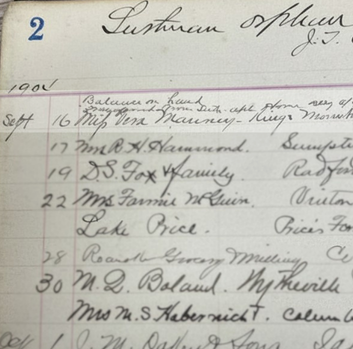
On September 16, 1904, Miss Vera Mauney made a gift to the Lutheran Children's Home of the South, a donation so carefully recorded that more than a century later, her handwritten name still surfaces in the archives. What moved her that September, we can only imagine. Perhaps it was her faith. Perhaps it was the sight of children who needed someone to care. Whatever it was, she gave. And she became part of a multi-generational story of giving.
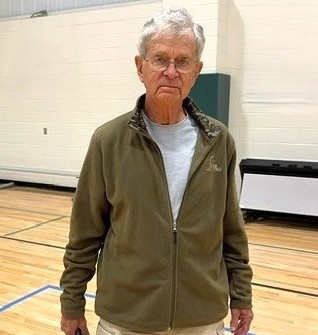
Her great-nephew, Luther Mauney, is still giving to the organization, now known as enCircle.
Between Vera and Luther stretches a century of quiet, dependable generosity. They believed vulnerable people matter and their faith has never allowed them to look away.
The Past
The Lutheran Church's commitment to Virginia's children in need took root in 1888 when Rev. William S. McClanahan officially organized the South View Orphan Home, later known as the Lutheran Children’s Home of the South. Over time, the Home shaped the communities and the families it touched.
The Mauneys were one of those families.
"When we were young, we visited the Children's Home fairly frequently," Luther explained. "Many of the residents came to College Lutheran Church in Salem on Sundays and that’s where our family attended."
The Mauney family has a long history with the Children's Home and the Lutheran Church. Luther’s father, who also went by the name Luther, was on the board of the Children’s Home and served as President of the Virginia Synod for 25 years. His sister, Mary, also served on the board of the Children’s Home and his first cousin, Jim, was a Bishop and, therefore, had an administrative connection to the Children's Home. His uncle Marshall, a Lutheran pastor, was a donor to enCircle and there are likely others, including family members from Luther’s grandmother’s side.
While Vera's 1904 gift is the earliest documented record of this family's generosity, it is likely evidence of something already present within the family. She was probably shaped by people who taught her that giving was simply what you do, given she was demonstrating such generosity at a young age. Luther recalls that when he was growing up the concept of caring for "orphans" was an important ministry of the church and, therefore, it was important to his family.
The Present
Luther Mauney didn't set out to continue a family legacy. He just knew what mattered.
"I have always been aware of people who have special needs," Luther said. "I have a desire to help the vulnerable, the ones who society tends to ignore or not treat fairly."
The geography for Luther has changed over the years. He has lived in Marion, Richmond, Roanoke, and Moneta, Virginia and now lives in North Carolina. Still, his instinct to help moves with him across towns and state lines. He has served young women from poverty areas, immigrants, financially at-risk families and adults with developmental disabilities. He is committed to the disenfranchised
"I have been blessed and I have been the recipient of a lot of important relationships that I can share with others," Luther said.
The Future
A century of giving doesn’t just happen. It happens because someone in each generation decided that the most faithful thing they could do with what they had was to share it.
Vera decided that in 1904. Luther is deciding it still.
"Realistically, there will always be this need," Luther said. "It's not going away. The treatment resources that society has been willing to allocate for children and youth in need have been decreasing over the years. So, now more than ever, I feel like it's important to continue to step up and provide some sense of care at an even greater level.”
Luther doesn't talk about legacy. He talks about need.
The people enCircle serves today – children, families in counseling, immigrants, students, adults with developmental disabilities – are the same people the Lutheran Children's Home was built to serve more than a century ago.
The need continues. As does the invitation.